What Age Can Kids Start Basketball? From Driveway Hoops to First Leagues
Here's what pediatric and youth-basketball guidelines actually say about when kids are ready for structured play, plus how to tell if your child is ready to move from driveway hoops to a first league.
By Shahen · August 1, 2026
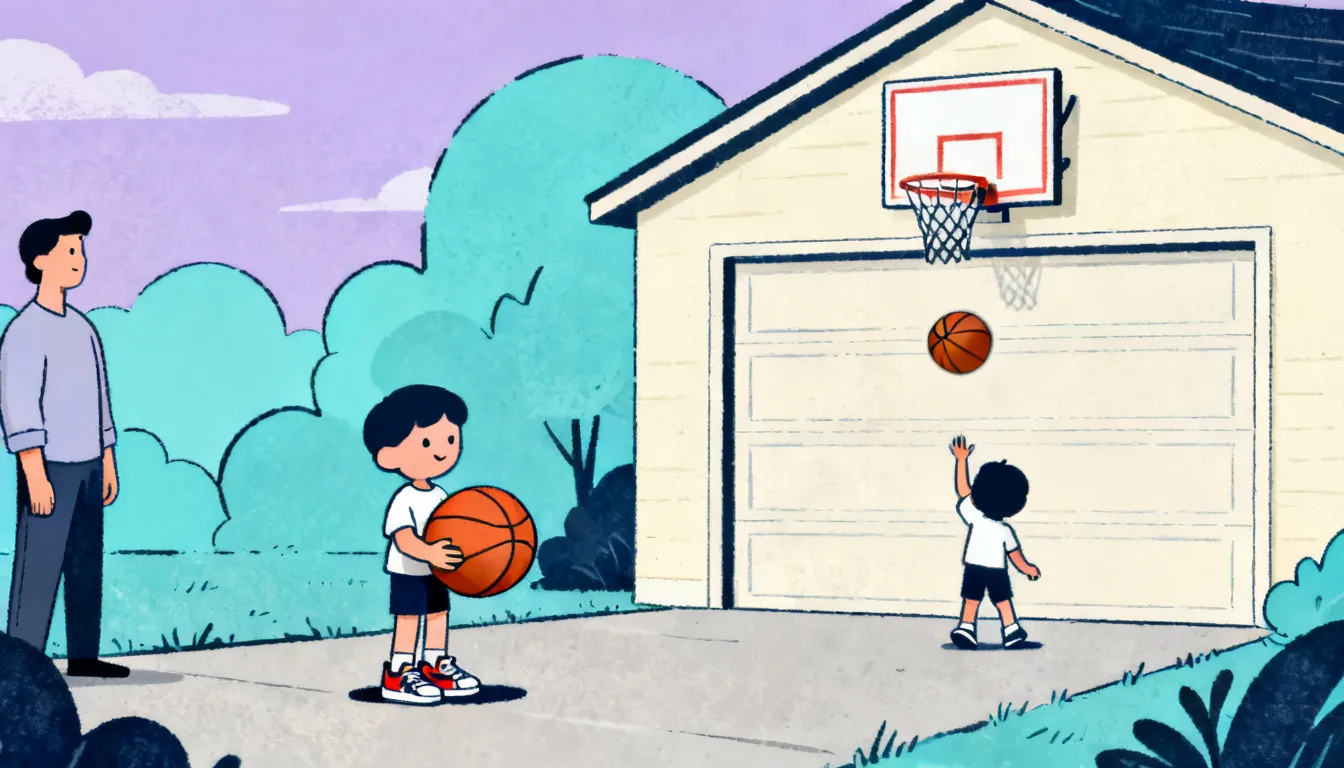
Most kids find their way to a basketball hoop long before anyone signs them up for anything official. A toddler tossing a soft ball toward a driveway hoop, a preschooler dribbling (badly, and that's fine) across the living room floor — that kind of play has no age minimum at all. Structured, organized basketball is a different question, and the American Academy of Pediatrics says most children are ready for organized sports at about age 6, once basic motor skills catch up to the demands of following rules and drills. Full teamwork and strategy concepts tend to click later, generally between ages 10 and 12. In ByndBell's directory, the basketball providers we currently list serve ages 2 to 15, so families can find something whether they're looking for a toddler intro class or a teen-level league.
What age can kids start basketball?
There's really no age floor for informal basketball. A driveway hoop lowered to a reachable height, a soft mini-ball, some backyard tossing — a toddler who can hold and throw a ball can start playing this way whenever a parent wants to put a ball in their hands. It's not a sport yet in any formal sense, just movement and fun.
Organized basketball, meaning a class or league with a coach, rules, and other kids to coordinate with, is where an age guideline actually matters. The AAP states that most children are ready for organized sports at about age 6, which is often the age families see as the natural entry point into a structured basketball class or intro league.
That said, readiness is a spectrum rather than a hard cutoff. Some kids show the coordination and attention span for structured play a bit earlier, others need more time, and both are normal. The number 6 is a useful average, not a rule that applies identically to every child.
What skills and readiness signs should I look for before enrolling?
By around age 6, most kids have the basic motor skills for simple organized sports, though they may still lack the hand-eye coordination and cognitive readiness needed for more complex sports concepts. That's why a lot of entry-level basketball programs for this age group focus on basic dribbling, passing, and shooting form rather than full five-on-five games with real plays.
Things shift again around ages 10 to 12. By that stage, most children have the motor skills and cognitive ability to handle sports that require complex motor skills, teamwork, and strategy, and experts note this level should still center on skill-building and fun rather than standings and competition.
USA Basketball and the NBA's youth guidelines reflect this same age progression in their rulebook. Their age-appropriate framework breaks youth basketball into four bands: ages 7-8, ages 9-11, ages 12-14, and grades 9-12, with different rules and expectations at each stage rather than one set of adult rules applied to everyone.
Beyond age itself, it helps to watch for practical readiness signs: can your child follow a multi-step instruction from a coach, take turns without needing constant reminders, and stay engaged for the length of a practice? Those behavioral cues often matter as much as birthdate when deciding if a child is ready for a structured class.
Driveway hoops or a league — where should we start?
Before jumping into anything organized, the AAP recommends young children get ample daily free play before moving into structured, organized sports. A driveway hoop fits that recommendation well. It lets a child build comfort with dribbling and shooting form at their own pace, with no schedule, no game pressure, and no one keeping score.
There are some signs a child is outgrowing casual play and might be ready for something more structured: asking to play with other kids instead of just a parent, handling short coaching-style instructions without frustration, and actually enjoying repetitive drills rather than losing interest after a minute or two.
None of this means a family has to rush toward a league. Backyard and driveway play has real developmental value on its own, not just as a placeholder before "real" basketball starts. Plenty of kids spend years shooting around at home before ever joining a class, and that's a perfectly good path.
Rec league or travel/club team — what's the difference as skills grow?
Once a child is playing organized basketball, families eventually face a second decision: rec league or something more competitive. On this point, the guidance from the sport's own governing bodies is fairly direct. The NBA and USA Basketball's youth guidelines recommend delaying single-sport specialization in basketball until age 14 or older, since playing multiple sports in childhood benefits both player health and long-term development.
That guidance lines up with pediatric research more broadly. Participating in multiple sports, at least until puberty, decreases the chances of injuries, overuse stress, and burnout in young athletes, which is a big part of why rec leagues remain the more commonly recommended starting point.
In practice, rec or house leagues tend to emphasize participation and fun for every kid on the roster, while travel or club teams add tryouts, more frequent practices, and a bigger time commitment for the whole family. General guidance following the research above is to keep elementary-age kids in multi-sport, lower-stakes rec settings before considering a jump to travel ball, and to let interest and skill, not just age, drive that decision.
What are the safety considerations at each age?
Basketball is a contact sport in practice even when it isn't in name, and the injury data reflects that. About 7 in 10 emergency department visits for sports- and recreation-related traumatic brain injuries and concussions involve kids 17 and under, and contact sports including basketball make up 45% of those TBI-related ED visits. That's a meaningful share, and it's worth keeping in mind as kids move from casual shooting into more physical, game-style play.
Age matters here too. An average of 283,000 children under 18 sought emergency department care each year for sports- and recreation-related TBIs between 2010 and 2016, with the highest rates among kids ages 10-14 and 15-17. That's roughly the same stretch where kids are moving into faster, more competitive play, so it tracks that risk climbs alongside intensity.
Basketball also shows up prominently in broader injury counts, not just head injuries. Basketball and cycling injuries together, nearly 900,000 a year, are among the most frequent sports-related injuries seen in U.S. emergency departments for children and young adults. As kids move into older, more competitive, contact-heavy age brackets, coach certification and age-appropriate contact rules become more important safety factors worth checking on before enrolling in any program.
What does youth basketball cost, and what should we expect to commit?
Cost and time commitment tend to scale with the level of play. Rec-department fees tracked in our directory range from $0 to $490 depending on the town and the specific program, and tracked rec programs run seasonally, with Fall Programming and Summer Programs as the two seasons we currently track. Across the towns we track, our directory follows 31 active rec-department youth programs spread across 5 towns, which gives a decent sense of typical local rec-league scale.
Costs and time commitment generally rise as families move from rec-level basketball into club or travel play, which usually layers on uniforms, travel to other towns, and sometimes private training on top of the base league fees. For a first season of organized basketball, a rec program is usually the lower-cost, lower-commitment way to test the waters before considering anything bigger.
How do you find a beginner program?
Our directory currently lists 9 basketball programs across the NJ counties we cover so far. Listings are concentrated in two counties right now: Middlesex County has 5 basketball programs listed, and Monmouth County has 4. We haven't added basketball providers to our other tracked counties yet, which reflects our current listings rather than a lack of local programs, since municipal leagues, Ys, and school clinics run in plenty of towns we haven't fully mapped yet.
Listed basketball providers serve ages 2 to 15, so there's usually something whether a family is looking for a toddler intro class or a league built for teens. If your county isn't yet represented, that's a gap in our listings, not in local options; it's worth checking directly with your town's rec department, a local Y, or a school-based clinic in the meantime. We're continuing to build out coverage, including counties like Bergen and Gloucester, so it's worth checking back as more programs get added.
Frequently asked questions
What size ball and hoop height should a beginner use?
Can a child start basketball for the first time as a preteen or teen with no experience?
Do youth basketball leagues separate boys and girls at young ages?
Should a child with a prior head injury be cleared before starting basketball?
How many days a week should a beginner practice outside of team sessions?
Shahen
Written by Shahen, founder of ByndBell and a New Jersey parent. ByndBell maintains a directory of kids' activity programs across the US, and the listing data cited here comes from that directory.
Shahen is not a pediatrician, coach, or child-development professional — claims about ages, safety, and development in these articles are sourced to named authorities and linked inline.