What Age Can Kids Start Karate? A Parent's Readiness Checklist
There's no magic birthday for starting karate. Here's what pediatric guidance actually says about readiness, injury risk, and how to find a beginner-friendly class in New Jersey.
By Shahen · July 27, 2026 · Updated August 1, 2026
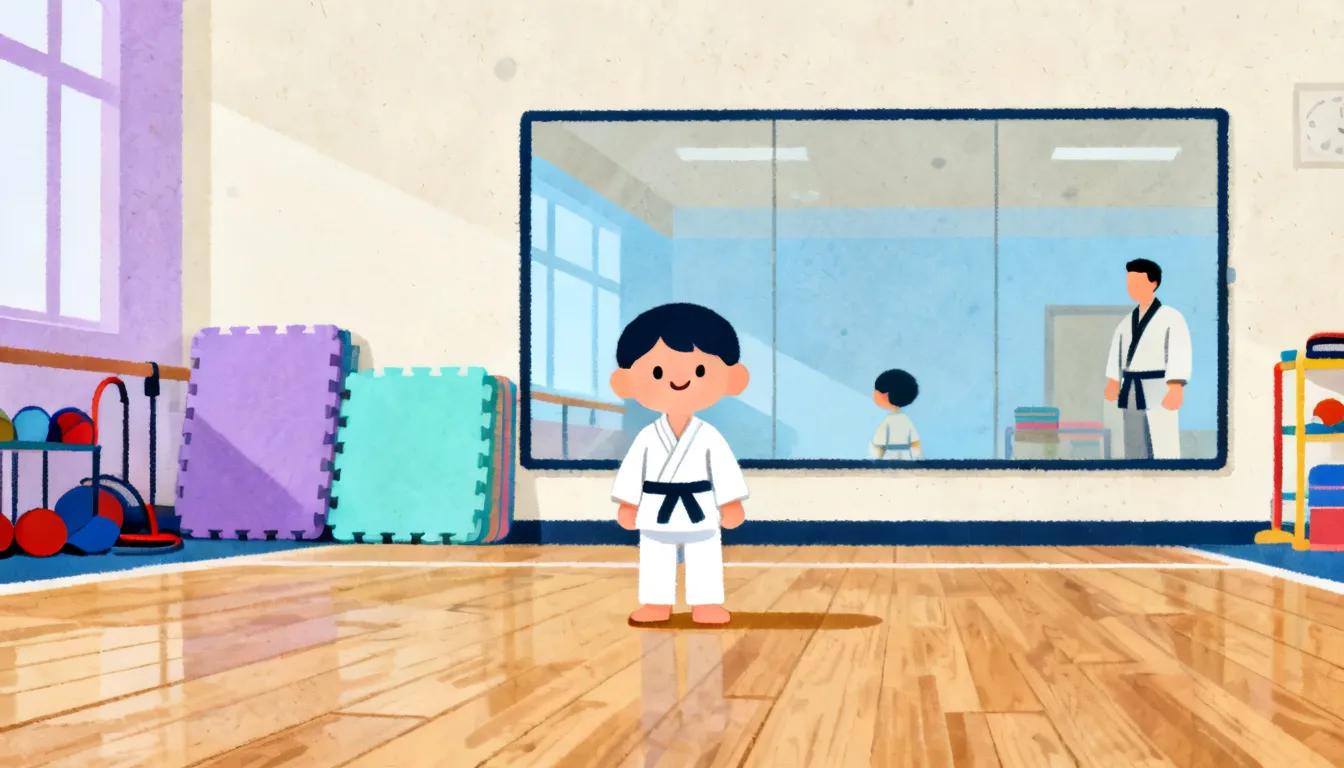
There's no single official age when kids can start karate. Pediatric guidance says martial arts can be fun and beneficial for children at any age, according to the American Academy of Pediatrics, and many dojos are happy to take on the youngest beginners in a family. What actually matters more than a birthday is whether your child can follow multi-step instructions, hold focus for the length of a class, and handle structured discipline. Readiness, not age, is the real gatekeeper, and that's a judgment call instructors and parents usually work out together, often during a trial class.
What age can kids start karate?
The AAP doesn't set a universal minimum age for beginning martial arts. Its guidance is that training can be fun and beneficial for children at any age, which is why you'll see dojos willing to enroll even fairly young kids as long as the class is structured for them.
Where age genuinely matters is progression, not entry. There's no set point at which a child becomes "old enough" to spar. The AAP is clear that children should master basic forms and movements before ever progressing to contact sparring, regardless of how old they are when they start. A five-year-old and an eight-year-old might both be brand new to karate, and both should spend real time on stances, footwork, and forms before anyone talks about contact.
Because age alone doesn't determine whether a child is ready, the more useful question for parents to ask isn't "how old is old enough," but "what should I actually be looking for." That's the next section.
What actually determines if my child is ready, beyond their birthday?
Readiness in karate leans heavily on a handful of practical things: can your child follow a multi-step verbal instruction ("step forward, turn your hips, then punch"), can they hold attention through a class, and do they have enough basic coordination and balance to attempt the movements without getting frustrated. None of these show up on a birth certificate.
Emotional readiness counts just as much as physical readiness. A child who can wait their turn in line, accept a correction from an adult who isn't a parent or teacher, and tolerate some repetition without melting down is usually going to have a better first few months than one who can't yet do those things, no matter how coordinated they are.
This is also where good instructors earn their keep. The AAP's guidance notes that instructors are expected to evaluate a child's limitations based on age, maturity, stature, and experience before advancing them, rather than running every student through an identical curriculum on an identical timeline. In practice, that means a well-run beginner class is already built to flex around exactly the attention-span and coordination differences you'd expect between kids the same age. If you're comparing programs, browsing Monmouth County's listed karate options is a reasonable way to see how many local dojos frame their beginner tracks around this kind of individual pacing rather than a fixed grade-by-age system.
What injury risks should parents weigh before enrolling?
It's worth going in with clear eyes on risk, and also with realistic expectations about how much is actually known. Pediatric-specific injury data for martial arts is relatively scarce, so a lot of what pediatricians rely on is extrapolated from studies on adult competitors and then applied cautiously to younger age groups.
The numbers that do exist for kids are worth knowing. A 2006 study estimated that 128,400 children aged 17 and under, with a mean age of 12.1, were treated in US emergency departments for martial arts injuries over a 13-year span, and karate specifically accounted for 79.5% of those cases. That's partly a reflection of how popular karate is compared to other styles, not necessarily proof that it's uniquely dangerous, but it's still the honest baseline.
Cumulative research puts pediatric martial arts injury rates somewhere between 41 and 133 injuries per 1,000 athletic exposures, a wide range that reflects differences in style, age group, and how "injury" gets defined across studies. Training volume also matters: training more than 3 hours a week is linked to a higher injury risk, and that risk roughly doubles for every additional 2 hours of weekly training beyond that point. Experience and age cut in a specific direction too: competitors with 3 or more years of experience are about twice as likely to be injured as newer competitors, and adult competitors are about 4 times more likely to be injured than those under 18. None of this is a reason to avoid karate, but it's a good argument for starting with modest weekly hours and letting your child's own interest, not a rush toward competition, set the pace.
How does karate compare to other martial arts styles for a young beginner?
For most families, the practical choice comes down to karate or taekwondo, since those are the two most commonly practiced martial arts styles in the US, which means they're also the styles most likely to have an actual class nearby.
Within either style, the type of drill matters more than the style label. Non-contact drills and forms carry a meaningfully lower injury risk than contact drills or competitive sparring, which is exactly why so many kids' programs hold off on contact elements for beginners regardless of which style they're teaching. When you're touring a class, it's fair to ask directly how long students train non-contact forms before any contact work begins.
Zoomed out, martial arts overall is considered low-risk per participant, but because millions of kids train, the raw injury count still adds up to a meaningful number nationally. "Low risk" is a real thing, but it doesn't mean "no risk," and that distinction is worth keeping in mind rather than treating either extreme as the full picture.
One style is worth calling out specifically: mixed martial arts. Because MMA carries an elevated risk of concussion and asphyxia, the AAP's guidance discourages youth and adolescent participation in it specifically, which sets it apart from traditional karate or taekwondo classes built around forms, discipline, and controlled sparring.
What benefits might my child gain from starting karate?
The upside is a real part of the equation too. The AAP notes that martial arts training can improve a child's attitude, self-esteem, self-respect, and self-awareness, benefits that show up less in a single class and more over months of consistent practice.
Beyond that, cited studies point to reduced stress, improved physical fitness, better school performance, and gains in motor and cognitive skill development among kids who train. It's also a genuinely mainstream activity at this point: more than 6 million children in the US currently participate in martial arts, which is a reasonable sign that this isn't a niche gamble but a well-worn path for youth fitness and character-building.
How do you find a beginner program, and what will it cost?
If you're ready to start looking, our directory currently lists 71 karate programs spread across three New Jersey counties: Monmouth (31), Middlesex (29), and Mercer (11). You can check Mercer County's listed karate programs for young students or see Middlesex County's listed karate programs for beginners to compare what's nearby before committing to a trial class.
Other counties we track, including Bergen, Camden, Passaic, and several more, don't yet have karate providers in our listings. That reflects the current state of our directory, not an absence of local programs, so it's worth checking directly with dojos in those areas even while we keep building out coverage there.
If cost or commitment level is the bigger question, our directory also tracks 31 active rec-department youth programs across 5 towns, with fees ranging from $0 to $490 depending on the program. These tracked rec programs run during Fall Programming and Summer Programs seasons, and because they're generally lower-cost and lower-commitment than an ongoing dojo membership, they can be a practical way to see whether your child actually takes to karate before you invest in a longer-term program.
Frequently asked questions
Can boys and girls train together in the same karate class?
Do beginners need to buy a uniform or gear before their first class?
Is taekwondo a better first martial art than karate for a young child?
What should I watch for during a trial or intro class before enrolling my child?
Are there lower-cost alternatives to a private karate dojo?
Shahen
Written by Shahen, founder of ByndBell and a New Jersey parent. ByndBell maintains a directory of kids' activity programs across the US, and the listing data cited here comes from that directory.
Shahen is not a pediatrician, coach, or child-development professional — claims about ages, safety, and development in these articles are sourced to named authorities and linked inline.