What Age Should Kids Learn to Swim? A Readiness Guide That Isn't One-Size-Fits-All
Pediatric guidance points to age 1 as a starting window for swim lessons, but real readiness depends on the child, not the calendar.
By Shahen · July 24, 2026 · Updated August 1, 2026
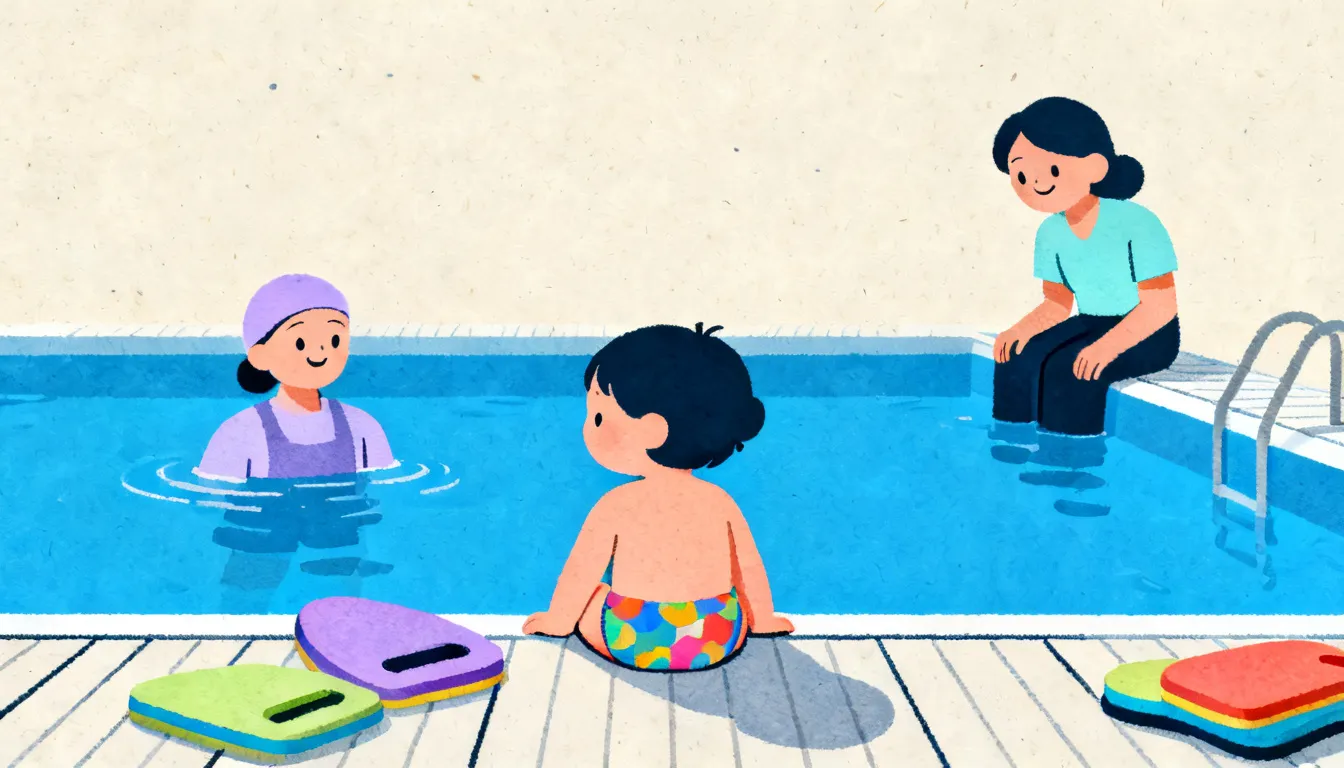
Most children are ready for formal swim lessons starting around their first birthday, but the American Academy of Pediatrics stresses this isn't a hard rule. Readiness depends on a child's emotional maturity, physical ability, and comfort in water, not just the age on a calendar. And true independent swimming, the kind where a child can propel themselves with something like a front crawl, typically doesn't show up until closer to the preschool years, regardless of how early lessons began.
If you're wondering what age kids should start swim lessons, the honest answer is: it depends on the kid in front of you.
Is there one "right" age to start swim lessons, or does it depend on the child?
The AAP's guidance is more of a starting point than a rule. Children can begin working toward water competency after their first birthday, but the decision should be individualized based on the child's emotional maturity, physical and cognitive ability, health status, and comfort with water.
That means two kids born the same week can have very different readiness levels. One toddler might happily dunk their face and paddle around; another might cling to you the moment water touches their chin. Neither reaction is wrong, and a rigid age cutoff doesn't capture that difference.
It also helps to know what's realistic. Most children aren't developmentally able to coordinate the movements needed for actual propulsion through water until closer to 4.5 years old. Lessons before that age are valuable, but they're building comfort and foundational skills, not producing a toddler who can swim laps.
Why do pediatricians warn against "infant swim" lessons under age 1?
It's tempting to start earlier, especially if a program markets itself as building water safety in babies. But pediatric groups are clear on this: there's no data supporting infant swim programs for children younger than 1 year when it comes to reducing drowning risk.
The reason is developmental, not a matter of opinion. Babies under 12 months are neurodevelopmentally unable to coordinate their arms and legs for propulsion, and they can't lift their heads to breathe effectively, even when they display reflexive underwater movements that might look like swimming. The AAP's technical statement notes those movements are reflexes, not functional swimming skills.
HealthyChildren.org adds a useful clarification here too: some infants between roughly 6 and 12 months can be trained to reflexively float on their backs. That's a trainable reflex, not a swimming skill, and it isn't a safety guarantee if a baby ends up in water unsupervised.
If my child takes lessons, do I still need to watch them every second?
Yes, and this is probably the single most important point in this whole topic. Swim lessons are one layer of protection, not a substitute for supervision. The AAP is explicit that lessons do not "drown-proof" a child, no matter how many sessions they've completed.
For infants, toddlers, and weaker swimmers, that means touch supervision: an adult swimmer staying within arm's reach whenever the child is in or near water, as the AAP recommends. The CDC's guidance echoes this, adding that the supervising adult should skip distractions like a phone or a book during that window.
The stakes are real. Drowning is a top cause of death for children ages 1 to 4, and it typically happens in seconds, often without noise or splashing, which is part of why it's so easy to miss if attention drifts.
What does a first swim class actually look like for toddlers versus preschoolers?
Classes generally shift in structure as a child grows, matching what's developmentally realistic rather than jumping straight to independent swimming.
For the youngest beginners, parent-and-child classes focus on water comfort: getting the face wet, blowing bubbles, and simply adjusting to the pool environment, rather than survival skills. As kids move into the 2-to-4 age range, they start acquiring real motor skills, like kicking and basic arm movement, often still with a caregiver nearby in the water.
By around 4.5 years, most children are developmentally ready for structured group lessons without a parent in the pool, per the same AAP technical report. That's not a promise every child will hit that milestone exactly on schedule, but it's a reasonable general marker for when independent group classes tend to click.
How long does it take before a child can actually swim on their own?
This is where a lot of parents assume starting early buys a shortcut, and the research doesn't really back that up.
One line of research, described in a review of swimming lessons for infants and toddlers, found that children's earliest water confidence and basic aquatic locomotion tend to appear around age 4, regardless of when their lessons started. A separate study cited in that same review found kids reached front-crawl proficiency around age 5.5 whether their lessons began at age 2, 3, or 4.
In other words, starting lessons earlier doesn't fast-track true swimming ability in any dramatic way. What seems to matter more is consistent, ongoing instruction across the preschool years, not the specific month a child's first class happened to fall on.
How do you find a beginner swim program once your child seems ready?
Once you've got a sense of where your child is developmentally, the practical part is finding a class that matches that stage rather than just an age bracket. Look for programs grouped by developmental category, parent-and-child, preschool motor-skills, or independent beginner, rather than a strict age cutoff, since that lines up better with how kids actually progress.
ByndBell's directory currently lists 38 swimming programs across three New Jersey counties. You can browse the swimming programs listed for kids in Middlesex County, see beginner-friendly swim programs listed in Monmouth County, or check swim program listings for Mercer County families.
Local rec departments are another avenue worth checking. Our directory tracks 31 active rec-department youth programs across 5 towns, with fees ranging from $0 to $490 across Fall and Summer seasons, and swimming can sometimes be part of that broader lineup depending on the town.
If you're browsing from a county we haven't built out yet, that reflects our current directory coverage, not an absence of programs in your area. We're adding listings on an ongoing basis, so it's worth checking back as coverage grows.
Frequently asked questions
Can babies under 6 months take swim lessons?
Does swimming ability actually lower drowning risk for preschoolers?
Which age group faces the highest drowning risk?
Why do some families skip swim lessons altogether?
Is it too late for an older child or teen to learn to swim?
Shahen
Written by Shahen, founder of ByndBell and a New Jersey parent. ByndBell maintains a directory of kids' activity programs across the US, and the listing data cited here comes from that directory.
Shahen is not a pediatrician, coach, or child-development professional — claims about ages, safety, and development in these articles are sourced to named authorities and linked inline.